TAP Air Portugal to Link Lisbon and Orlando from October 2026
The Star Alliance carrier will fly three weekly Airbus A330-900neo rotations between LIS and MCO from 29 October 2026, becoming the only nonstop operator between Portugal and Central Florida.
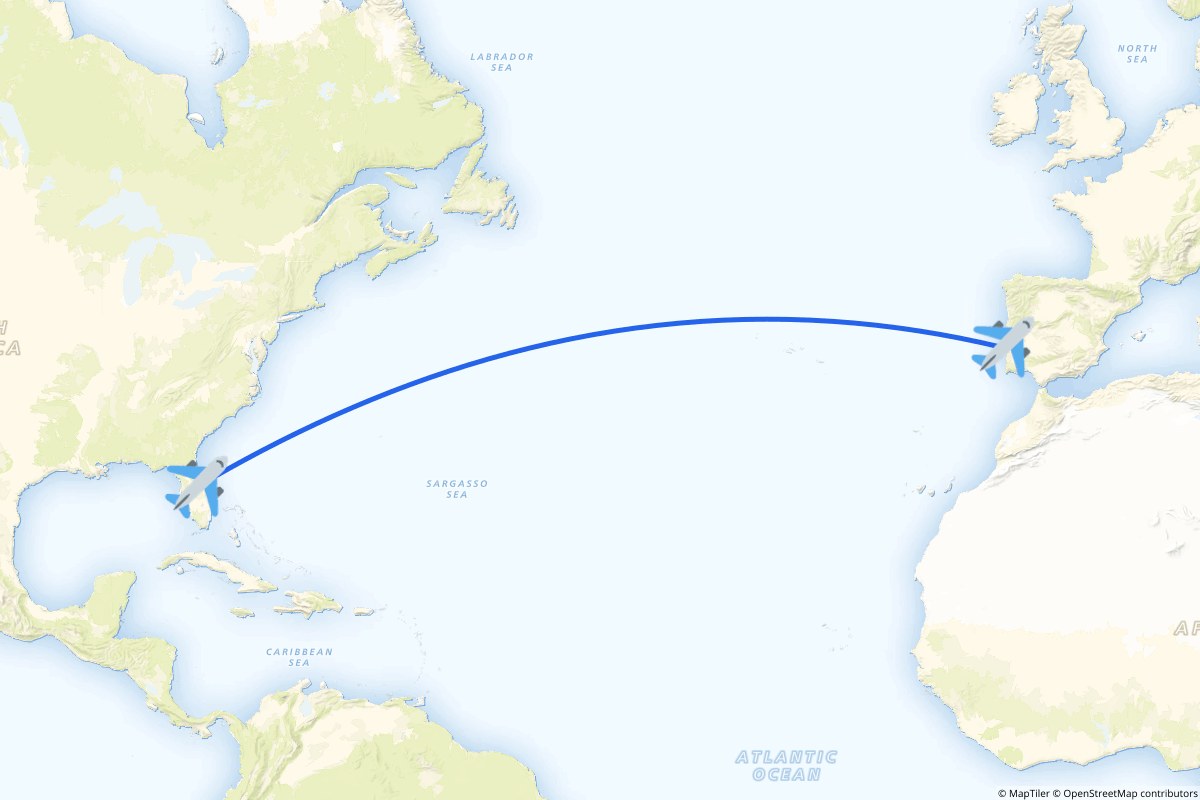
Route overview
TAP Air Portugal will launch nonstop flights between Lisbon and Orlando on 29 October 2026, opening the only scheduled link between Portugal and Central Florida. The Star Alliance carrier will operate the route three times weekly with the Airbus A330-900neo, departing Lisbon Humberto Delgado Airport on Mondays, Thursdays and Saturdays for Orlando International Airport.
- Airline
- TAP Air Portugal
- Route
- Lisbon (LIS) to Orlando (MCO)
- Aircraft
- Airbus A330-900neo
- Frequency
- 3x weekly (Mon, Thu, Sat)
- First flight
- 29 October 2026
The sector spans roughly 6,500 kilometres, with a scheduled block time of around nine hours westbound against prevailing winds and a shorter eastbound return. The inaugural departure falls on a Thursday, four days after the northern winter timetable change on 25 October, placing the launch at the start of the winter 2026/27 season as Orlando’s theme-park and cruise traffic builds towards its Thanksgiving and Christmas peaks. TAP has placed the service on sale across its usual distribution channels.
Orlando in TAP’s network
Orlando becomes TAP’s eighth destination in the United States, joining Boston, Chicago O’Hare, Miami, New York JFK, Newark, San Francisco and Washington Dulles, and its second Florida gateway after Miami. In the wider North American market it sits alongside the carrier’s Canadian gateways, Toronto and Montreal. North America has been the focus of the airline’s long-haul growth over the past decade, complementing a network that otherwise centres on Brazil, where TAP is the leading European carrier, and on Portuguese-speaking Africa. The new route extends that North Atlantic push into the largest US leisure market not yet on its map.
The service rests on TAP’s hub model at Lisbon, where waves of short-haul arrivals feed the long-haul departure bank. Connections are available from across Portugal and Spain as well as France, Italy, Switzerland and the United Kingdom, with Star Alliance partners extending the catchment further. Lisbon’s position as mainland Europe’s westernmost hub also works in the route’s favour: itineraries from Iberia and southern Europe to Florida pass through Lisbon with minimal detour, a geographic advantage TAP has used consistently in its North Atlantic scheduling.
The aircraft: Airbus A330-900neo
TAP was the global launch operator of the A330-900neo, taking delivery of its first aircraft in 2018, and the type is now the backbone of its long-haul fleet. The airline’s A330-900s are configured with 298 seats, comprising 34 full-flat business seats and 264 in economy, of which 96 offer extra legroom. Power comes from two Rolls-Royce Trent 7000 engines, and the widebody’s belly holds provide meaningful cargo capacity alongside the passenger cabin. TAP also deploys the narrowbody Airbus A321LR on thinner North Atlantic sectors; Orlando, by contrast, receives the widebody from day one.
At three weekly rotations, the schedule adds 894 one-way seats per week in each direction between the two cities. The 6,500-kilometre sector sits comfortably within the type’s range, allowing full passenger and cargo payloads throughout the year.
About the airports
Lisbon Humberto Delgado Airport is Portugal’s principal international gateway and TAP’s home hub, with 160 nonstop routes in current schedule data. Its busiest link is Madrid, served by eight operators across 6,597 flights, followed by Barcelona at 4,263 flights and Amsterdam at 1,989. Beyond Iberia, Paris Orly draws six competing operators, while London, Zurich, Rome, Geneva and Paris Charles de Gaulle lead the medium-haul table. The airport also carries dense domestic and near-domestic feed, with Porto, Funchal and Ponta Delgada all among its most-served points, traffic that connects directly onto the long-haul bank. Lisbon remains heavily slot-constrained, which makes every new widebody departure a deliberate allocation of scarce capacity.
Orlando International Airport is Florida’s busiest airport, handling more than 57 million passengers in 2024, and offers 210 nonstop routes in a network dominated by domestic trunk flying. Atlanta is its largest route by flight count at 343 flights, followed by San Juan at 299, Dallas-Fort Worth at 236 and Charlotte at 234, while Chicago O’Hare and Miami each host nine operators, the widest carrier spread on the field. Those domestic links matter for the new service, distributing arriving European traffic across the southeastern United States and the Caribbean. Locally, the airport anchors demand from the Walt Disney World and Universal resorts, the Orange County Convention Center and Port Canaveral’s cruise terminals, giving it one of the most leisure-weighted traffic mixes of any large US airport.
Market context and competition
No other airline links Portugal and Orlando nonstop, and TAP faces no direct competition on the city pair at launch. Lisbon-Orlando traffic has historically connected over US East Coast hubs, including United’s Newark and Washington Dulles services from Lisbon, or over other European gateways; no carrier has offered same-plane service between the two cities in either direction. Orlando’s transatlantic roster is otherwise concentrated on northern Europe, with British Airways and Virgin Atlantic operating from the United Kingdom, Aer Lingus from Dublin, Lufthansa from Frankfurt and Icelandair over Reykjavik; southern Europe has been a conspicuous gap in the airport’s long-haul map.
For connecting passengers, TAP will compete against one-stop routings offered by the transatlantic joint ventures over hubs such as London Heathrow, Frankfurt, Amsterdam and Atlanta. Its case rests on nonstop convenience for the local market and on Lisbon’s short-detour geography for Iberian and southern European points of sale. The three-weekly pattern is a measured entry, committing a single widebody rotation on each operating day within a long-haul fleet that is already heavily utilised across the Atlantic. For Orlando, the service adds a new inbound European market at an airport whose international offering remains small relative to its domestic base.
Sources & references (4)
Generated with editorial oversight from AI research.